News
Recent News
Traffic Management Course QLD: The Complete 2026 Career & Training Guide
May 15, 2026

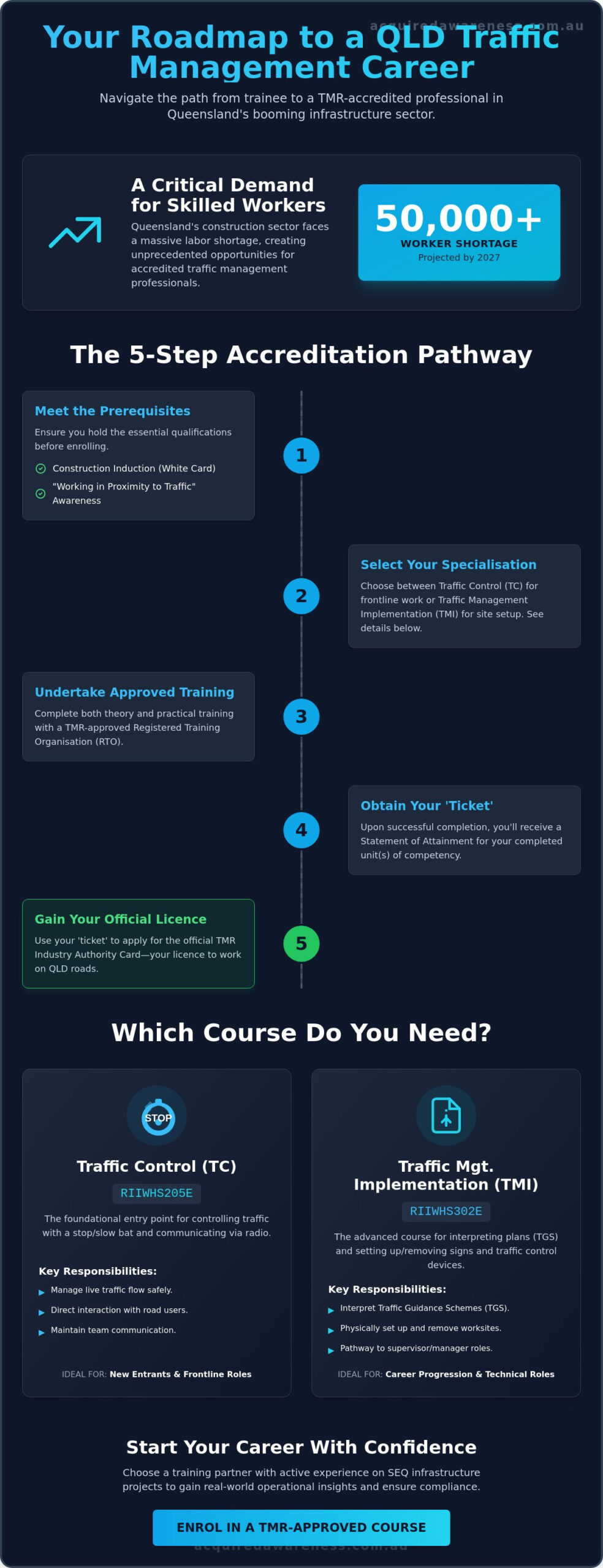
With Queensland’s construction sector projected to face a shortage of over 50,000 workers by 2027, the demand for qualified personnel has reached a critical peak. Choosing the correct traffic management course qld is the first step toward a stable career, yet many applicants find themselves stalled by confusing unit codes and shifting TMR requirements. You likely recognize that professional safety on our roads is a serious responsibility that starts with the right accreditation, but the difference between RIIWHS205E and RIIWHS302E isn’t always clear.
It’s vital to follow a compliant path that secures your official Industry Authority card rather than just a certificate. This guide clarifies the mandatory training process, including the essential White Card and “Working in Proximity to Traffic” prerequisites. We’ll show you how to navigate the transition from a training “ticket” to a valid TMR licence. By following this structured roadmap, you’ll gain the technical competence and safety mindset required to join the SEQ infrastructure workforce with total confidence.
Key Takeaways
- Understand how the Department of Transport and Main Roads (TMR) regulates accreditation to ensure your training results in a valid Queensland Industry Authority card.
- Distinguish between Traffic Control (TC) and Traffic Management Implementation (TMI) to identify the specific traffic management course qld required for your intended role.
- Confirm your eligibility by reviewing mandatory prerequisites, such as the Construction Induction (White Card) and the required awareness modules for working near traffic.
- Follow a clear, sequential guide through the enrollment process, theory fundamentals, and the practical requirements needed for professional compliance.
- Learn why selecting a training partner with active experience in South East Queensland infrastructure projects ensures you receive real-world operational insights.
The 2026 Landscape of Traffic Management Training in QLD
Queensland’s road networks are currently undergoing a period of unprecedented expansion. As of May 2026, the intersection of massive infrastructure investment and a critical labour shortage has redefined the industry’s operational requirements. The Department of Transport and Main Roads (TMR) maintains absolute authority over these standards to ensure every individual on a worksite possesses the technical competence to protect themselves and the public. This oversight is anchored in the Manual of Uniform Traffic Control Devices (MUTCD). Completing a traffic management course qld is no longer just a career entry point; it is a commitment to upholding rigorous safety mandates that keep our communities moving safely.
Why Demand is Surging for Accredited Controllers
South East Queensland has become the epicentre of Australian infrastructure development. Major projects, including the Bruce Highway Upgrade Program and preliminary works for the Brisbane 2032 Olympic Games, have created a sustained need for a skilled workforce. Current data indicates that the construction worker shortage in Queensland is expected to peak at over 50,000 people between 2026 and 2027. This surge makes it an ideal time to secure a traffic control course Brisbane to fill these vital roles. The industry has also shifted toward higher safety standards in Temporary Traffic Management (TTM). Employers now prioritize candidates who demonstrate a disciplined, safety-first mindset rather than those who simply hold a certificate.
The Regulatory Framework: TMR and RTOs
The path to accreditation is governed by a strict relationship between TMR and Registered Training Organisations (RTOs). TMR sets the legislative requirements and issues the final Industry Authority card, while RTOs provide the specialized training. It is essential to understand that you must choose a TMR-approved provider to ensure your training is valid. These regulations are designed to align with Australian traffic control standards, ensuring consistency across high-stakes environments. Non-compliant training can have severe consequences, including the inability to obtain a licence or facing legal liability under the Work Health and Safety Act 2011. Enrolling in an accredited traffic management course qld ensures that your skills meet the ethical and operational benchmarks required by the state. This structured approach builds a foundation of stability and professional pride for every new entrant in the field.
Comparing QLD Traffic Management Courses: Which One Do You Need?
Selecting the right traffic management course qld requires a clear understanding of the operational roles defined by the state’s regulatory framework. While many entry-level workers view road safety as a single job, the industry distinguishes between two primary functions: active traffic control and site implementation. Choosing between these paths, or opting to master both, will determine the types of projects you can access and your long-term career trajectory in South East Queensland. Each role carries a specific set of responsibilities that demand a disciplined, safety-first mindset.
Traffic Control (TC) – New Entrant Requirements
The RIIWHS205E unit of competency is the foundational entry point for those who wish to control traffic with a stop/slow bat. This role is about direct, frontline interaction with road users. You’ll learn to manage traffic flow safely while maintaining constant communication with your team via two-way radios. It’s a role that requires high levels of concentration and a total commitment to the Traffic Controller Accreditation Scheme. Beyond the technical skills, being a TC demands physical and mental resilience. You must remain alert for long periods and maintain absolute composure when managing vehicle movements in high-pressure environments.
Traffic Management Implementation (TMI) – Level 2
If your goal is to move beyond the bat and take on more technical responsibilities, the RIIWHS302E unit is essential. This course focuses on interpreting Traffic Guidance Schemes (TGS) and physically setting up or removing signs and devices. It’s a more complex role that serves as the primary path toward becoming a site supervisor or manager. You’ll learn the precise placement of advanced warning signs, cones, and bollards to ensure every work zone remains compliant with TMR standards. This skill set is vital for ensuring that the site environment is predictable and safe for both the crew and the public.
Many professionals choose to complete both the TC and TMI courses simultaneously. Holding both qualifications makes you a far more versatile asset on any SEQ infrastructure project. It allows you to transition between active control and site setup as needed, which significantly increases your value to employers. If you’re ready to build a foundation in this industry, enrolling in a Traffic Control Course – New Entrant provides the technical depth and professional accreditation required for these high-stakes roles. This dual-qualification approach is the standard for anyone seeking stable, long-term employment in the sector.
Step-by-Step: How to Complete Your Traffic Management Course
Securing your accreditation is a structured process designed to ensure you possess the discipline required for high-risk environments. The path is sequential. You cannot skip ahead to field work without first establishing a firm grasp of the theoretical frameworks mandated by the state. Every candidate must begin by obtaining a Unique Student Identifier (USI). This is a mandatory federal requirement for all vocational training in Australia. Once your enrolment is confirmed, you’ll move through a series of phases that balance classroom knowledge with real-world application, ensuring you meet the QLD Government traffic management training standards.
Phase 1: Classroom and Online Theory
Your first day of training focuses on the fundamentals of the Manual of Uniform Traffic Control Devices (MUTCD). You’ll learn to identify site-specific hazards and conduct thorough risk assessments before any equipment is deployed. A significant portion of this phase involves mastering the “Working in Proximity to Traffic” Awareness components. Part 1 is an online module covering general safety theory, while Part 2 focuses on the practical application of these safety principles. You must pass the TMR-mandated theory exams to demonstrate your understanding of traffic flow, radio protocols, and emergency procedures. This technical foundation is what allows you to maintain total composure when you eventually step onto a live worksite.
Phase 2: The Practical Experience Requirement
Theory alone does not grant competency. To earn your traffic management course qld certification, you must complete a logbook of 20 hours of practical experience on live roads. This supervised work is critical. It allows you to apply your classroom knowledge under the guidance of experienced professionals. You’ll practice setting up signs, managing vehicle movements with a stop/slow bat, and implementing traffic guidance schemes in real-time scenarios. Securing a placement with a reputable provider is the most efficient way to complete these hours. Once your logbook is verified and your final practical assessment is successful, you’ll receive a Statement of Attainment. This “ticket” is the document you need to submit when applying for your official traffic controller licence QLD through the Department of Transport and Main Roads.
The final step involves a formal application to TMR, which includes a criminal history check and a medical fitness declaration. Following these steps ensures your career is built on a compliant, professional foundation. This methodical approach protects you, your crew, and the Queensland public.
Prerequisites and Compliance: Are You Ready to Enrol?
You cannot simply walk onto a live worksite or enter a classroom for a traffic management course qld without meeting foundational safety benchmarks. These prerequisites are established by the Department of Transport and Main Roads (TMR) to ensure every participant possesses the baseline awareness necessary for high-stakes environments. Compliance is not a suggestion; it is a legal mandate that protects you and the public. Before you commit to training, you must ensure your documentation and personal readiness align with current 2026 standards.
The QLD White Card: Your First Step
The General Construction Induction card, commonly known as a White Card, is a non-negotiable prerequisite. You must hold this qualification before you can commence any traffic management training. It provides the essential safety knowledge required to navigate a construction environment without endangering yourself or others. If you haven’t yet secured this entry-level ticket, you should prioritize completing a white card QLD to remain eligible for further accreditation. Ensure your card is current and recognized by Workplace Health and Safety Queensland to avoid delays in your enrolment process.
Health, Safety, and Fitness for Work
Traffic management is physically and mentally demanding. You will often stand for long periods, frequently in the intense South East Queensland heat, while maintaining total concentration on vehicle movements. This requires a “guardian” mindset. You take ownership of the safety of everyone within your zone. Mental alertness is critical; there is no room for distraction when lives are on the line. Consequently, the industry maintains a strict zero-tolerance policy regarding drugs and alcohol. You must be prepared to undergo testing as part of your employment and training, reflecting the serious professional responsibility inherent in the role.
Beyond these core requirements, you must also meet the following standards to ensure full compliance:
- Driver’s Licence: You must have held an open or provisional driver’s licence (Australian or foreign) within the last five years. This is essential for roles involving the movement of vehicles or equipment.
- LLN Standards: You need a functional level of Language, Literacy, and Numeracy. This ensures you can read Traffic Guidance Schemes, fill out logbooks, and communicate clearly via radio.
- PPE Requirements: On your training days, you must wear compliant Personal Protective Equipment. This typically includes steel-capped boots, long trousers, and sun protection.
Meeting these standards demonstrates your commitment to the disciplined nature of the industry. If you have your documentation ready and are prepared for the physical demands of the road, you can view upcoming course dates to begin your accreditation journey.
Choosing the Right Training Partner: The Acquired Awareness Difference
Selecting where to complete your traffic management course qld is a decision that directly impacts your safety and long-term employability. Acquired Awareness Traffic Management, RTO #40905, operates with a unique dual identity. We are both a top-tier service provider and an educational authority. This means your training is grounded in current operational realities rather than outdated textbooks. You learn from seasoned mentors who have managed high-stakes environments on major South East Queensland infrastructure projects. This disciplined leadership ensures you develop the professional responsibility required for the road.
From the Classroom to the Road
Our facilities in Brendale and Yatala are designed to simulate the complex scenarios you’ll face on live worksites. You won’t simply look at diagrams of equipment. You’ll have direct access to the latest traffic control devices and radio technology used on active sites. This hands-on approach ensures you transition from a student to a professional with total composure. We instill a central safety-themed mantra in every trainee: safety is a proactive mandate that requires meticulousness. By using the same gear available through our equipment hire service, you gain technical depth that other providers cannot match.
Ongoing Support and Renewals
Your career journey continues well after your initial accreditation. A Queensland Traffic Controller Industry Authority Card is valid for three years from the date of issue. Acquired Awareness Traffic Management provides a structured, logical path for both Traffic Control Course – Renewal and Traffic Management Implementation Renewal to ensure your credentials never lapse. Maintaining your ticket is a legal obligation that we help you manage through our methodical renewal programs. For those seeking to advance their career, we offer upskilling opportunities in Traffic Management Design (TMD), allowing you to move into site planning and leadership roles.
We take immense pride in our regional heritage and our role as a guardian of public welfare. Our focus remains entirely on the mission at hand: preparing you for a disciplined career in a thriving sector. If you’re ready to build your future with an industry leader that prioritizes your competence and stability, you can Book your 2026 Traffic Management Course with Acquired Awareness Traffic Management today. We are ready to help you secure your place in the SEQ infrastructure sector.
Build Your Future on Queensland’s Roads
Queensland’s infrastructure landscape is evolving rapidly, and the need for disciplined, safety-conscious professionals has never been greater. You now have a clear roadmap for navigating TMR’s mandatory requirements, from the initial White Card prerequisite to the final practical assessment. This structured path ensures that you don’t just hold a certificate, but possess the technical competence to manage high-stakes environments with total composure. Completing your traffic management course qld with a provider that understands the operational realities of the road is the most effective way to secure long-term employment.
At Acquired Awareness Traffic Management (RTO #40905), we provide TMR-approved training led by experienced industry trainers who bring real-world SEQ project insights to every session. With state-of-the-art facilities in both Brisbane and the Gold Coast, we are committed to your professional development and success in the field. Take the next step toward a stable and rewarding career by joining a community that prioritizes safety and excellence.
Secure Your Spot in Our Next QLD Traffic Management Course
We look forward to helping you achieve your accreditation and seeing you contribute to the safety of our regional road networks.
Frequently Asked Questions
How long does a traffic management course take in QLD?
A standard traffic management course qld typically requires one to two days of face-to-face theory training. However, your accreditation is not complete until you fulfill the mandatory 20 hours of supervised practical experience on live roads. This practical component is documented in a logbook and must be verified by a qualified supervisor before you can apply for your official licence.
What is the difference between TC and TMI tickets?
The Traffic Control (TC) ticket focuses on the RIIWHS205E unit, which qualifies you to manage traffic flow using a stop/slow bat. The Traffic Management Implementation (TMI) ticket covers the RIIWHS302E unit, which involves the physical setup and removal of signs and devices according to a Traffic Guidance Scheme. While TC is about active vehicle management, TMI is a more technical role centered on site layout and compliance.
Do I need a driver’s licence to become a traffic controller?
Yes, you must have held an Australian or foreign provisional or open driver’s licence within the last five years to meet TMR eligibility requirements. This ensures you have a foundational understanding of road rules and driver behavior. You’ll also need to provide your licence details during the enrolment process for any traffic management course qld.
How much does a traffic management course cost in Brisbane?
The cost of training in Brisbane varies depending on whether you’re a new entrant or seeking a renewal. Prices are influenced by the quality of the training facilities and whether the provider includes assistance with your practical placement hours. You should check with a TMR-approved Registered Training Organisation for current rates that match your specific training needs.
Is the QLD traffic control ticket valid in other Australian states?
Queensland traffic controller accreditation is not directly transferable to other Australian states. Each state operates under its own regulatory body and specific legislative framework. If you hold an interstate ticket, you’ll likely need to complete a bridging course or a partial training program to meet the specific standards required in Queensland.
What happens if my traffic control licence expires?
Your Industry Authority card is valid for exactly three years from the date of issue. If your licence expires, you’re legally prohibited from working on any Queensland road project. To remain compliant, you must complete a Traffic Control Course – Renewal or a TMI Renewal before your current card’s expiry date to ensure continuous accreditation.
Can I get a job immediately after finishing the course?
Demand is currently high, with Queensland facing a projected shortage of 50,000 construction workers by 2027. While you’ll receive a Statement of Attainment upon finishing the course, you cannot legally work until TMR processes your application and issues your Industry Authority card. Once licensed, many graduates find immediate employment through labour hire agencies or active traffic management companies.
What PPE do I need to bring to my training day?
You must bring site-compliant Personal Protective Equipment to both your theory and practical training sessions. This includes steel-capped safety boots, long trousers, and a long-sleeved high-visibility shirt. It’s also essential to bring sun protection, such as a wide-brimmed hat and safety glasses, as much of your assessment occurs in outdoor environments.