News
Recent News
Traffic Control Safety Requirements Brisbane: The 2026 Compliance Guide
July 20, 2026
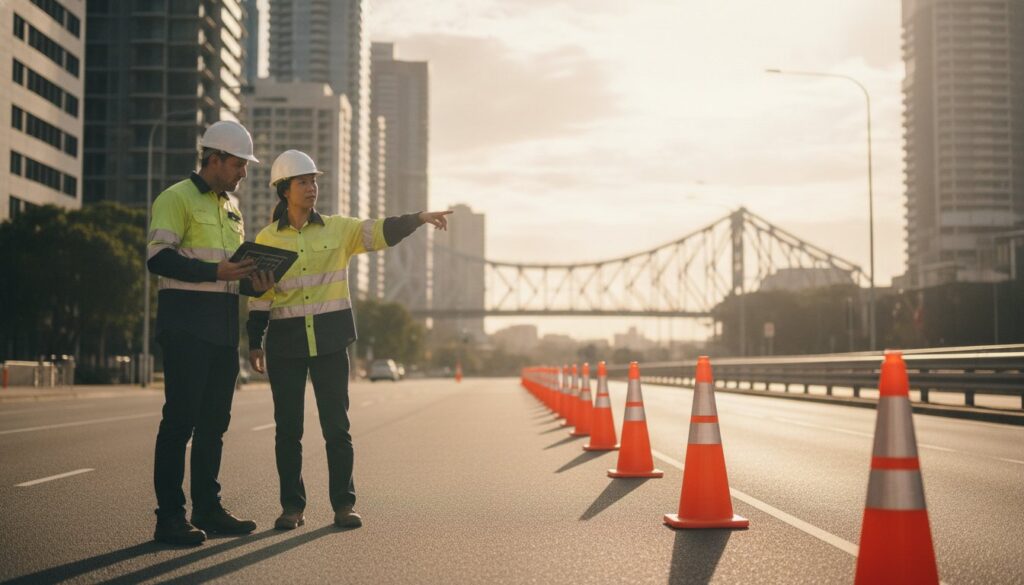
A single overlooked permit or an outdated traffic guidance scheme can halt a multi-million dollar project before the first traffic cone is placed on the asphalt. Meeting the traffic control safety requirements Brisbane mandates in 2026 requires a precise balance between the technical rigor of the Queensland Guide to Temporary Traffic Management and the specific local bylaws of the Brisbane City Council. We understand that the overlap between Department of Transport and Main Roads standards and local council permits often feels like a moving target. It is a high-stakes environment where the safety of the public and your crew depends on total operational precision.
This guide provides a comprehensive roadmap to navigating these strict standards, ensuring your site remains 100% compliant and protected from heavy fines. You will gain a clear checklist of required permits, including the standard A$341.00 non-refundable application fee for road impacts, and an explanation of the July 1, 2026 updates to the QLD MUTCD. We also detail the essential RTO-accredited training your personnel must hold to operate legally on South East Queensland roads. This overview ensures you have the technical depth and local knowledge necessary to manage any road-based project with total composure.
Key Takeaways
- Master the dual jurisdiction of TMR technical standards and Brisbane City Council bylaws to ensure your project meets all traffic control safety requirements brisbane.
- Gain clarity on the current QGTTM framework and the July 2026 updates to the QLD MUTCD regarding signage placement and metro visibility distances.
- Navigate the Brisbane City Council permit process with confidence, identifying exactly when you need a Road Corridor Permit or specific CBD access approvals.
- Secure your site with the right expertise by understanding the mandatory RTO-accredited training required for both traffic controllers and implementation specialists.
- Learn how a professionally designed Traffic Management Plan integrates risk assessment and contingency planning to protect both the public and your operational timeline.
Understanding Brisbane’s Traffic Control Safety Framework
Compliance on Brisbane’s road network is a multi-layered responsibility. It isn’t enough to follow a single manual; instead, you must harmonize state-wide technical standards with specific local government permits. These traffic control safety requirements brisbane contractors must follow ensure that every work zone remains a controlled and predictable environment. The Department of Transport and Main Roads (TMR) provides the technical foundation for these rules, while the Brisbane City Council (BCC) dictates the operational access to the city’s complex road corridors. We view this framework not as a hurdle, but as a vital blueprint for public welfare.
In 2026, the focus has shifted significantly toward protecting vulnerable road users. With the July 1, 2026, updates to the Queensland Manual of Uniform Traffic Control Devices (MUTCD), there’s a heavier emphasis on Personal Mobility Devices and electric cycles. This means your safety framework must account for more than just vehicular flow. It must safeguard the entire community moving through the urban landscape. Whether you’re managing a small utility repair or a major infrastructure project, your approach must be proactive and disciplined.
The Legal Hierarchy: Who Sets the Rules?
Understanding the hierarchy of authority is the first step toward total compliance. At the state level, the Queensland MUTCD serves as the primary legislative instrument. It works in tandem with the Queensland Guide to Temporary Traffic Management (QGTTM), which provides the practical application of Australian road sign standards across the state. Currently, Queensland operates under the QGTTM Edition 1.1 (2021) for most parts, with Part 8 relying on the 2019 edition. Finally, the Brisbane City Council’s Road Corridor Permit System (RCPS) acts as the local gatekeeper. You can’t legally occupy a council road without an approved permit, regardless of how technically sound your traffic plan might be.
Duty of Care and Liability in 2026
The Work Health and Safety Act 2011 remains the cornerstone of your legal obligations. Under this Act, every person conducting a business or undertaking has a non-delegable duty of care to ensure the safety of workers and the public. Failure to meet traffic control safety requirements brisbane can lead to severe consequences. Non-compliant sites risk heavy fines, with standard permit application fees starting at A$341.00 and penalties for breaches reaching much higher. We emphasize the necessity of an auditable trail. Every risk assessment, Traffic Guidance Scheme, and daily diary entry serves as your legal shield. Maintaining these records demonstrates a commitment to meticulousness and ethical standards that defines a leader in this field.
Technical Standards: QGTTM and QLD MUTCD Explained
The shift from the traditional Australian Standard AS 1742.3 to the comprehensive Queensland Guide to Temporary Traffic Management (QGTTM) represents a fundamental change in how we secure work zones. This transition moved the industry from a rigid, prescriptive model to a sophisticated, risk-based methodology. For anyone managing traffic control safety requirements brisbane, this means your setup must be tailored to the specific environmental hazards of the site. You can’t simply apply a generic diagram and expect compliance. The QGTTM is the primary technical authority for all temporary traffic management in Queensland.
Visibility distances and signage placement are critical in the Brisbane metro area. High-speed corridors like the Inner City Bypass require longer warning buffers compared to suburban streets. Speed limit reductions in these zones aren’t just advisory; they are legally binding through the approved Traffic Management Plan. Police and TMR inspectors verify the placement of signs to ensure these limits are enforceable. If your signage doesn’t meet the reflectivity or sizing standards, the entire work zone is legally compromised. Safety isn’t a suggestion. It’s a mandate.
Core Requirements of the QGTTM
A risk-based approach requires a deep understanding of the local environment. In high-density Brisbane suburbs, your plan must prioritize the safety of pedestrians and cyclists. The July 1, 2026 updates to the QLD MUTCD specifically address personal mobility devices and electric cycles. This requires dedicated detours that are clearly marked and physically separated from live traffic. The QGTTM serves as the primary technical authority for temporary traffic management in Queensland.
Signage and Equipment Standards
Technical compliance depends on the quality of your hardware. Standardized road transport signs must meet strict criteria for sizing and mounting heights to remain visible in all weather conditions. Utilizing professional traffic control equipment hire ensures your site uses well-maintained VMS boards and Type B arrows. These devices provide the high-level warning necessary for multi-lane roads. Positive separation using barriers or bollards is often a mandatory requirement for high-speed zones. Partnering with a provider that maintains an extensive inventory of compliant gear is the most reliable way to meet these technical mandates.
Brisbane City Council Permits and Access Requirements
A technical plan remains just a document until it receives formal approval from the local authority. In our region, the Road Corridor Permit (RCP) is the essential gatekeeper for any activity impacting council managed roads. While state level manuals provide the “how,” the Brisbane City Council (BCC) dictates the “where” and “when.” Adhering to traffic control safety requirements brisbane means respecting the specific rhythms of the city, from CBD peak hours to suburban school zones. You can’t legally place a single sign on a council road without this authorization.
The 2026 standards place a heightened priority on the flow of the entire community. If your project impacts a footpath or a dedicated bikeway, the permit requirements become significantly more stringent. You can’t simply redirect pedestrians without a detailed Traffic Guidance Scheme (TGS) that accounts for accessibility and safety. Timing is equally critical. Clearway restrictions and school zone hours are non-negotiable. Attempting to operate during these peak windows without specific, high level authorization will result in immediate site closure and significant fines. We’ve seen that even the most well intentioned projects fail without this level of meticulous planning.
Steps to Secure a Brisbane Road Corridor Permit
Your first task is identifying the road hierarchy. Major roads require longer lead times for permit assessment compared to minor suburban streets. You must engage a qualified professional to provide Traffic Management Design services. This ensures your Traffic Management Plan (TMP) is robust enough to pass the BCC’s rigorous review process. Once the design is finalized, submit your application through the BCC online portal. You’ll need to include the standard A$341.00 non-refundable application fee along with all supporting safety documentation and your TGS. Accuracy at this stage prevents costly delays.
Special Event vs. Construction Permits
Construction permits focus on heavy vehicle movements and long term site stability, but special event permits require a different type of community focus. For festivals or community gatherings, you must manage noise and light spill to protect residential Brisbane neighbourhoods. High profile public events often require the integration of security services alongside your traffic controllers to manage crowd flow. Regardless of the permit type, maintaining an unflappable commitment to the safety of the public remains our central mantra. Every permit application is a promise of professional responsibility to the people of Brisbane.
Accreditation: The Human Element of Safety
While technical plans and council permits establish the operational framework, the human element is what ultimately safeguards the public. In 2026, the traffic control safety requirements brisbane mandates are clear: every individual on site must hold current, verified accreditation. High-stakes environments leave no room for guesswork. A site is only as compliant as the personnel managing it. We believe that professional responsibility begins with rigorous education, ensuring that every team member understands their role as a guardian of public welfare.
The distinction between roles is fundamental to site safety. A Traffic Controller (TC) focuses on the immediate flow of vehicles and pedestrians, typically using a stop-slow bat. Conversely, a Traffic Management Implementation (TMI) specialist is responsible for the physical setup of the site, including the placement of signs, barriers, and cones according to the Traffic Guidance Scheme. Both roles require specific training. Completing a traffic control course is the mandatory first step for anyone seeking to work on Queensland roads. These certifications aren’t permanent; they require renewal every three years to ensure personnel remain current with the latest safety protocols and legislative changes.
Mandatory Certifications for Brisbane Personnel
To operate legally, personnel must hold the Queensland Traffic Controller Industry Authority, often referred to as the “Ticket.” This is coupled with the requirement for a White Card, which provides the general induction for construction site entry. Those responsible for setting up devices must hold the TMI qualification. Only RTO-accredited training is legally recognised because it ensures every controller operates under the same rigorous safety protocols mandated by the Queensland government. This standardized training prevents the inconsistencies that lead to accidents in complex urban environments.
Ongoing Compliance and Site Audits
Compliance doesn’t end with a certificate. It’s a daily operational mandate. Site supervisors must verify the traffic controller licence qld of all staff before they step onto the road corridor. This verification process is a critical component of your risk management strategy. Daily site safety briefings and toolbox talks are also required to address site-specific hazards and weather conditions. Meticulous record-keeping is essential. You must maintain detailed site diaries and TGS logs that are available for inspection at any time. These documents provide the auditable trail necessary to prove your site meets all traffic control safety requirements brisbane authorities expect.
If you need to ensure your team is fully accredited and ready for the road, explore our Traffic Control Course options to secure your project’s compliance.
Implementing a Compliant Traffic Management Plan (TMP)
The final pillar of project success is the transition from regulatory theory to site execution. While permits and accreditation provide the legal right to work, a comprehensive Traffic Management Plan (TMP) serves as the operational master document. This strategic bridge ensures all traffic control safety requirements brisbane mandates are met in a live environment. A high quality TMP is far more than a simple diagram. It is a robust risk management tool that anticipates hazards before they manifest on the asphalt. We believe that a proactive approach to planning is the only way to maintain total control over a worksite.
Engaging professional traffic management services South East Queensland partners is critical for complex sites. A compliant TMP must integrate three core components: a detailed risk assessment, a site-specific Traffic Guidance Scheme (TGS), and comprehensive contingency plans. These elements work together to ensure that if a vehicle breakdown or weather event occurs, your team has a pre-approved response ready. Professional design doesn’t just improve safety; it significantly reduces project delays and the likelihood of permit rejections from the Brisbane City Council.
From Design to Execution: The AATM Approach
Our approach is grounded in a deep sense of professional responsibility. Our designers use localized Brisbane knowledge to optimize traffic flow, ensuring that work zones cause minimal disruption to the community. This involves more than just following the QGTTM. It requires an understanding of how specific intersections and corridors behave during peak hours. By integrating our Traffic Management Design services with high quality equipment and accredited controllers, we provide an end to end solution. We also maintain a steadfast readiness to provide support for emergency roadworks or utility repairs, ensuring that even the most chaotic scenarios remain under total control.
Next Steps for Your Brisbane Project
Navigating the 2026 compliance landscape requires a disciplined leader who takes full ownership of the environment. If you’re preparing for a road based project, the first step is requesting a site-specific consultation. This allows us to identify the specific road hierarchy and lead times required for your permit approvals. In 2026, standard permit applications generally require a non-refundable fee of A$341.00 and varying assessment periods depending on the impact level. Contact the Acquired Awareness team for professional guidance. We’re here to act as your seasoned mentor, handling the technical compliance burden so you can focus on your core mission with total confidence.
Securing Your Project’s Future on Brisbane Roads
Managing a road-based project in South East Queensland requires a meticulous approach to compliance. You’ve seen how the interplay between state technical standards and local council permits forms the backbone of a safe worksite. Success depends on harmonizing the QGTTM framework with specific Brisbane City Council access requirements while ensuring every team member holds the correct RTO-accredited credentials. By prioritizing these traffic control safety requirements brisbane authorities mandate, you protect both your crew and your project timeline from avoidable risks.
As a leading South East Queensland traffic specialist and an RTO #40905 accredited training provider, we take full ownership of the technical burden. Our comprehensive permit and design services ensure that your site is prepared for any operational challenge. You can move forward with the confidence that your project is grounded in elite execution and local expertise. Ensure your Brisbane project is 100% compliant-Contact Acquired Awareness today for professional traffic management solutions. We look forward to helping you manage a safe and successful site.
Frequently Asked Questions
What is the difference between a Traffic Management Plan (TMP) and a Traffic Guidance Scheme (TGS)?
A Traffic Management Plan (TMP) is the overarching strategic document that outlines the risk assessment, site responsibilities, and emergency procedures for a project. A Traffic Guidance Scheme (TGS) is the technical diagram that shows the specific layout of signs, cones, and barriers on the road. Both documents are essential to meet the traffic control safety requirements brisbane authorities mandate for road corridor permits.
How long does it take to get a road closure permit from Brisbane City Council?
Permit lead times depend heavily on the road hierarchy and the level of impact on the network. Major road corridors typically require at least 20 business days for assessment, while minor suburban streets may be processed more quickly. It’s vital to factor in these timelines early in your planning phase to avoid costly project delays or last minute permit rejections.
Do I need a traffic controller for a short-term driveway closure in Brisbane?
Yes, you generally require an accredited traffic controller if the work impacts the public road corridor or compromises pedestrian safety. Even short term closures must adhere to the QGTTM standards to ensure the public is safely directed around the obstruction. Relying on unaccredited staff for these tasks creates a significant liability risk and violates local council safety bylaws.
What are the fines for non-compliant traffic control on a Brisbane construction site?
Non-compliance can result in heavy financial penalties and the immediate suspension of your Road Corridor Permit. While specific fine amounts are determined by the severity of the breach, the cost of a site shut down often far exceeds the initial penalty. Maintaining 100% compliance is the only way to protect your project from these severe operational and legal consequences.
Can I use my own staff to control traffic if they have a White Card?
No, a White Card only provides a general induction for construction site entry and does not authorize traffic control duties. To legally manage vehicle or pedestrian flow, staff must hold a current Queensland Traffic Controller Industry Authority. Using unaccredited personnel is a direct breach of traffic control safety requirements brisbane and will invalidate your site’s insurance coverage.
What is the vulnerable road user requirement in the 2026 QGTTM?
The July 1, 2026 updates to the QLD MUTCD mandate specific protections for Personal Mobility Devices (PMDs) and electric cycles. Traffic management plans must now include dedicated detours and physical separation for these users in high density urban zones. This requirement ensures that the growing number of scooter and e-bike users can move safely through construction environments.
How often do traffic control signs need to be inspected on a long-term Brisbane site?
Signs and safety devices must be inspected at the start of every shift and at regular intervals throughout the day. These checks ensure that equipment hasn’t been moved by wind, traffic, or unauthorized persons. All inspections must be recorded in the site diary to maintain an auditable trail of compliance that inspectors can verify at any time.
Does Acquired Awareness handle the permit application process for clients?
Yes, we provide a full-service solution that includes managing the entire permit application process with the Brisbane City Council. Our team handles the technical Traffic Management Design and the submission of all required safety documentation. This end to end management ensures your project meets every regulatory hurdle without adding to your administrative burden.