Blog
Recent Articles
Road Closures on Sunshine Coast: How to Plan and Stay Safe in 2026
April 30, 2026
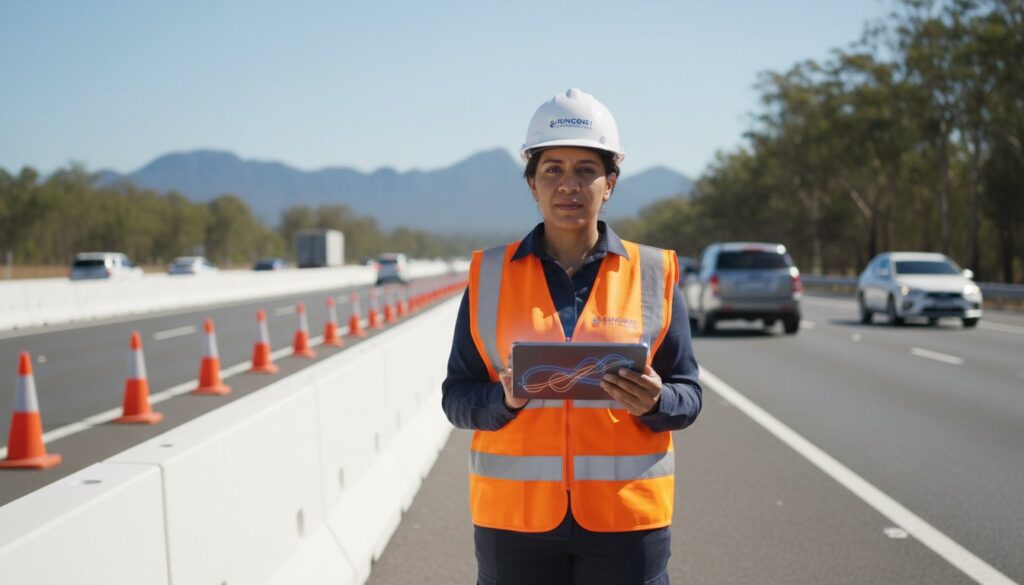
A single uncoordinated traffic delay can cost a local construction project upwards of A$2,500 in lost productivity before the first pylon is even placed. Whether you’re a commuter trying to reach Maroochydore, an enthusiast driving a JDM vehicle imported via Rayan Trading, or a site manager overseeing a major build, navigating road closures on sunshine coast has become a complex exercise in logistics and compliance. We understand the frustration of hitting an unexpected detour or the confusion of determining whether a route falls under the Sunshine Coast Council or the Department of Transport and Main Roads (TMR) jurisdiction. It’s a high-stakes environment where safety and efficiency must coexist.
This guide provides the clarity you need to stay ahead of the curve in 2026. You’ll learn how to access real-time closure data instantly, understand the legal requirements for closing a lane, and manage your own project impacts without compromising public safety. We’ll examine the specific permit processes and the safety mandates that protect every worker and road user in our region. From identifying the correct authority to implementing a robust traffic management plan, this is your roadmap to professional compliance and community protection.
Key Takeaways
- Identify the three official data sources used to navigate real-time hazards and distinguish between emergency flooding and scheduled maintenance.
- Understand how the 2026 regional growth strategy and local festivals impact road closures on sunshine coast to better plan your transit.
- Compare the accuracy of government traffic hubs against common navigation apps to ensure your weekend travel plans remain uninterrupted.
- Learn the technical requirements for managing public road access, including how to develop a compliant Traffic Management Plan (TMP) for your project.
- Discover why partnering with a safety-first traffic specialist ensures your SEQ infrastructure works meet the highest standards of protection and compliance.
How to Find Real-Time Road Closures on the Sunshine Coast
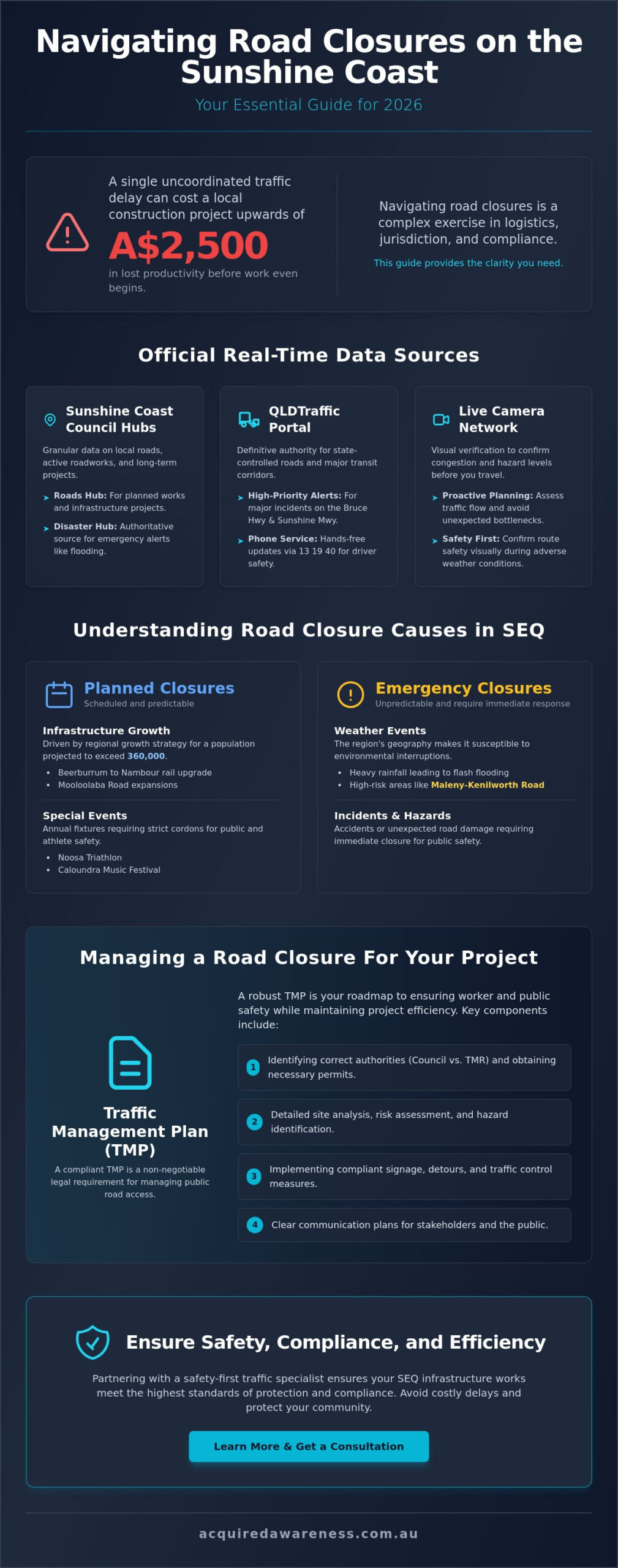
Navigating the region safely requires access to accurate, live data. Relying on outdated information leads to unnecessary risks and avoidable delays. To manage road closures on sunshine coast effectively, you should consult three primary official sources: the Sunshine Coast Council Disaster Hub, the QLDTraffic portal, and the live camera network. Each platform serves a specific purpose in your safety planning strategy.
Distinguishing between planned maintenance and emergency hazards is vital for risk mitigation. While roadworks are scheduled and predictable, hazards like flash flooding require an immediate response. Safety is our priority. Using visual verification through live traffic cameras allows you to confirm congestion levels before starting your engine. This proactive approach ensures that your journey remains compliant with safety standards and avoids the chaos of unexpected bottlenecks. It’s about maintaining total control over your environment.
The Sunshine Coast Roads Hub and Disaster Hub
The Sunshine Coast Council manages the Roads Hub, a digital interface designed for high-level situational awareness. By using specific map layers, you can filter for active roadworks or long-term infrastructure projects. This level of detail is essential because local council data is often more granular than national GPS applications. While a standard app might show a general delay, the Roads Hub identifies the exact nature of the obstruction, such as a specific lane closure or a localized detour.
During extreme weather events, the Disaster Hub becomes the authoritative source for emergency alerts. The devastating impact of the 2022 eastern Australia floods demonstrated the necessity of real-time hazard mapping. These alerts provide critical updates on road stability and water levels, allowing for informed decision-making. We recommend setting up custom alerts for major arteries. Monitoring the Bruce Highway and Sunshine Motorway via these hubs ensures you receive notifications the moment a high-priority incident occurs. Our commitment to protection means leaving nothing to chance.
QLDTraffic: The Authority for State-Controlled Roads
For major transit corridors, QLDTraffic is the definitive authority. While council sites cover local streets, QLDTraffic monitors state-controlled infrastructure. This distinction is crucial for long-distance travel planning. If you’re commuting between Maroochydore and Brisbane, this platform provides the most reliable data on high-priority alerts. It’s a professional tool for ensuring operational continuity on the road. Understanding how to monitor road closures on sunshine coast through this portal ensures you remain in control of your schedule.
Safe driving requires focus. The 13 19 40 traffic phone service offers a hands-free solution for receiving updates while in transit. It allows drivers to maintain situational awareness without compromising safety. Interpreting “high priority” alerts on the Sunshine Motorway is a skill every local driver should master. These alerts signify significant incidents that require immediate route adjustments. By integrating these official sources into your routine, you uphold the “Safety First” mantra that defines our commitment to the Queensland community. We deliver solutions that keep you moving safely.
Understanding the Causes of Road Closures in SEQ
Special events also play a significant role in local traffic patterns. Annual fixtures like the Noosa Triathlon and the Caloundra Music Festival necessitate strict cordons to manage pedestrian safety and athlete corridors. Additionally, the geography of the Sunshine Coast makes it susceptible to weather-related interruptions. Heavy rainfall often leads to flash flooding in the hinterland, particularly along Maleny-Kenilworth Road, where low-lying crossings can become impassable within minutes.
Planned Maintenance vs. Emergency Closures
Planned works are scheduled weeks in advance. Authorities use digital signage, social media updates, and community notices to inform the public well before the first cone is placed on the asphalt. This allows businesses and residents to adjust their schedules and minimize productivity loss. Unplanned incidents, such as vehicle crashes on the Bruce Highway or hazardous chemical spills, require a rapid, disciplined response to mitigate delays. Emergency Traffic Management is an immediate safety response designed to protect the public and first responders during unplanned incidents. Our team prioritizes safety through rigorous compliance and traffic planning to keep the community moving during these high-pressure scenarios.
Council Roads vs. TMR Jurisdictions
Jurisdiction dictates who manages a specific closure and who is responsible for the safety standards on-site. Sunshine Coast Council handles local streets and neighborhood access points. The Department of Transport and Main Roads (TMR) manages state-controlled arterials, including the Sunshine Motorway and all major highways. Knowing the difference is vital when applying for permits or reporting hazards.
- Sunshine Coast Council: Contact for issues on suburban streets, local park access, and council-led beautification projects.
- TMR: Responsible for high-speed corridors and major freight routes where heavy vehicle compliance is a priority.
Real-time awareness is the best tool for driver safety. Residents can access live updates via QLDTraffic to avoid congestion points and plan alternative routes. This official portal tracks every major incident across the state, ensuring that road closures on sunshine coast don’t catch well-prepared drivers off guard. Using these resources helps maintain a steady flow of traffic even during complex infrastructure builds.
Planning Your Route: Tools and Resources for Drivers
Navigating the Sunshine Coast requires a proactive approach to route planning, especially as major infrastructure projects continue throughout 2026. Relying on a single navigation app often results in frustration when encountering unmapped road closures on sunshine coast. Drivers need a multi-layered strategy that combines official state data with real-time community feedback to ensure safe and timely arrivals.
Comparing Traffic Information Tools
Professional drivers and logistics operators prioritise data integrity over interface aesthetics. While crowdsourced apps excel at identifying minor congestion, they often lag behind official sources during complex, multi-day road closures on sunshine coast. The following table compares the primary tools available to Queensland motorists:
| Feature | QLDTraffic | Google Maps | Waze |
|---|---|---|---|
| Closure Accuracy | Highest (Official Data) | Moderate | Moderate (User-led) |
| Real-Time Speed | Moderate | High | High |
| Hazard Reporting | High (Official) | Low | High (Crowdsourced) |
| Future Planning | Included | Not Available | Not Available |
Official state platforms like QLDTraffic provide a “Future Events” feature. This is a critical resource for weekend travel planning. It allows drivers to view scheduled maintenance and event-based closures up to 14 days in advance. Professional drivers rely on this data because it originates from the source of the closure, ensuring 100% accuracy regarding start and end times.
To avoid congestion hotspots during peak 2026 tourist seasons, such as the Easter long weekend or the September school holidays, plan routes that bypass the Mooloolaba and Noosa heads. Data from 2025 indicated that secondary arterial roads often save up to 15 minutes during peak morning windows between 7:30 AM and 9:00 AM.
Safe Driving Through Work Zones
When you encounter an unexpected closure, the on-site traffic controller serves as the Expert Protector of the environment. These professionals manage high-risk zones where heavy machinery and public vehicles intersect. Their primary objective is the mitigation of risk for everyone on the road. They operate under the strict standards defined in the Queensland Guide to Traffic Management to ensure site compliance and safety.
Drivers must maintain total focus when approaching Variable Message Sign (VMS) boards. These digital displays provide the most current instructions for the specific stretch of road ahead. Adhering to temporary speed limits is not optional; these limits are calculated based on the proximity of workers to live traffic lanes. Ignoring a traffic controller’s signal is a breach of the Transport Operations (Road Use Management) Act 1995 and results in heavy fines and demerit points. Safety remains the absolute priority in every work zone.
How to Manage a Road Closure for Your Project
Executing road closures on sunshine coast requires more than just orange cones and high-vis vests. It’s a rigorous process governed by strict safety standards and legal obligations. To ensure your project remains compliant and the public stays safe, you must follow a methodical five-step approach.
- Step 1: Assess the footprint. Determine exactly how your work affects public access. You need to identify if you’re impacting pedestrian paths, bus routes, or emergency vehicle access points.
- Step 2: Design the strategy. You’ll need a formal Traffic Management Plan (TMP) and a Traffic Guidance Scheme (TGS). These documents outline the logic and the physical layout of your site.
- Step 3: Secure approvals. Apply for permits through the Sunshine Coast Council for local roads or the Department of Transport and Main Roads (TMR) for state-controlled assets.
- Step 4: Mobilise the team. Engage accredited traffic controllers who understand the local terrain. Ensure all equipment meets current Australian standards.
- Step 5: Execute and monitor. Implement the closure with a total focus on worker and public safety. This includes regular site audits to ensure signs haven’t shifted and risks remain mitigated.
Permits and Traffic Management Plans (TMPs)
A Traffic Guidance Scheme (TGS) is a technical diagram that illustrates the exact placement of signs, barriers, and personnel. It’s a mandatory requirement under the Queensland Guide to Temporary Traffic Management (QGTTM). You can’t legally alter traffic flow without one. Managing the application process for road occupancy involves detailed submissions to local authorities. For projects crossing regional boundaries, you can Learn more about Traffic Control Brisbane to understand how professional planning scales for larger infrastructure needs. Most Council applications require at least 10 to 15 business days for processing, so early submission is vital for your project timeline. Project managers procuring traffic management services south east queensland should also review the 2026 procurement framework to avoid permit delays and ensure QGTTM compliance across all site phases.
Engaging Professional Traffic Controllers
There’s a massive difference between a basic stop/slow setup and managing a complex multi-lane intersection. High-risk road closures on sunshine coast demand experienced personnel who can read traffic patterns and react to hazards in real time. Every controller on your site must hold valid QLD traffic control tickets and undergo regular inductions. We believe “Safety First” is the only acceptable mantra. It’s not just a slogan; it’s a commitment to ensuring every worker and motorist returns home safely. Using professional teams reduces your liability and ensures your site remains productive and secure. If you need a partner who takes ownership of your site safety, contact Acquired Awareness today.
Partnering with Professionals for Safe SEQ Infrastructure
Acquired Awareness Traffic Management (AATM) serves as the primary guardian for Southeast Queensland’s transport networks. We’ve spent over 20 years refining our role as the “Expert Protector” in high-risk environments. Managing road closures on sunshine coast requires more than just signs and cones; it demands a disciplined approach to public safety and infrastructure integrity. Our team views every project through a lens of deep professional responsibility. We don’t just manage traffic. We protect lives.
Our status as a Registered Training Organisation (RTO 40552) sets us apart from standard providers. This dual identity ensures that every traffic controller on your site has met rigorous national standards. We provide a full suite of services that cover every stage of the project lifecycle. Our capabilities include:
- Custom Traffic Management Plan (TMP) design and professional drafting.
- Comprehensive equipment hire, including VMS boards, solar lighting, and water-filled barriers.
- On-site traffic control for high-complexity infrastructure projects.
- Direct liaison with local councils and the Department of Transport and Main Roads (TMR).
While managing physical traffic is paramount, large-scale infrastructure projects also necessitate sophisticated monitoring systems. Providers like Alfa Alarm and Control Equipment specialize in the integrated security and IT solutions that keep modern business operations secure and connected.
Our commitment to “Expert Protection” means we leave nothing to chance. We combine technical industry terminology with a values-driven approach to ensure compliance. Every strategy we deploy focuses on mitigation and excellence. This steady, methodical rhythm builds trust with our clients and the community alike.
AATM’s Impact on Sunshine Coast Safety
Coastal environments present unique challenges, from high-volume tourist traffic to the specific logistics of narrow seaside corridors. During recent 2025 infrastructure upgrades, our teams managed complex diversions that maintained local business access while ensuring total worker safety. Our “can-do” Australian attitude means we tackle these obstacles head-on without ego. You can also see our approach to Professional Gold Coast Traffic Management, where we apply the same rigorous compliance standards to urban coastal zones. We deliver stability in chaotic environments through disciplined leadership.
Get Started with Your Traffic Solution
Proactive planning is the most effective way to mitigate risk and prevent project overruns. Engaging our team during the early stages of your project lifecycle allows for more robust safety designs and cost-effective resource allocation. For firms seeking to translate operational efficiency into long-term commercial success, Ananda Advisory offers strategic growth and value creation consultancy. We provide detailed, transparent quotes for projects across the Sunshine Coast, Brisbane, and the wider SEQ region. Our team is ready to provide the calm authority your site needs to stay compliant. Contact Acquired Awareness today to secure reliable traffic control and expert protection for your next road closures on sunshine coast or major construction project.
Secure Your Project and Protect the Sunshine Coast Community
Navigating the evolving landscape of Queensland’s infrastructure requires a proactive approach to safety. Staying ahead of road closures on sunshine coast requires using real-time digital tools and maintaining a deep understanding of SEQ conditions. For project managers, compliance isn’t just a legal requirement; it’s a professional responsibility to the public and your crew. Acquired Awareness brings decades of experience in SEQ infrastructure to every project we manage. As an accredited training provider (RTO #40905), we ensure our teams operate with elite technical proficiency and calm authority.
We design comprehensive Traffic Management Plans (TMP) that mitigate risk and keep traffic flowing efficiently. You don’t have to manage these complexities alone. Partner with a team that views public safety as a non-negotiable priority. Secure your site and protect the community with a professional strategy tailored to your specific requirements. We’re ready to help you deliver a safe, successful project that keeps the Sunshine Coast moving forward safely into 2026.
Request a Traffic Management Quote for Your Sunshine Coast Project
Frequently Asked Questions
How do I find out about road closures on the Sunshine Coast today?
You can access real-time information on road closures on the Sunshine Coast by visiting the QLDTraffic website or calling 13 19 40. This official Department of Transport and Main Roads (TMR) platform provides 24/7 updates on incidents, hazards, and planned works. We recommend checking these live maps before every journey to ensure your route’s clear and safe. Reliable data prevents delays and protects our community’s well-being.
Is the Bruce Highway closed right now?
Current status updates for the Bruce Highway are available through the QLDTraffic portal, which monitors the 1,679-kilometre stretch of this critical infrastructure. While the highway remains open under normal conditions, heavy rain or major incidents can trigger immediate closures. Always verify the specific section between Brisbane and Gympie before departing. Safety’s our priority, and staying informed’s the first step in professional risk mitigation.
What is the difference between a TMP and a TGS?
A Traffic Management Plan (TMP) is a comprehensive document outlining the overall strategy for managing risks, while a Traffic Guidance Scheme (TGS) is the specific visual diagram showing sign and cone placement. Under the AGTTM standards, a TMP provides the why and how of the project’s safety approach. In contrast, the TGS gives our field teams the precise layout for implementation. Both are essential for compliance on any road project.
Do I need a permit to close a lane for a skip bin or crane?
You must obtain a Road Corridor Permit or a Permit to Occupy from the Sunshine Coast Council or TMR before placing a skip bin or crane on a public road. These approvals ensure your activities don’t compromise pedestrian or motorist safety. Applications typically require a minimum of 10 business days for processing. We assist clients in navigating these compliance requirements to keep projects moving without legal or safety setbacks.
How can I report a dangerous road hazard on the Sunshine Coast?
Report immediate life-threatening hazards to 000, or call 13 19 40 to notify the Department of Transport and Main Roads about significant road debris or damage. For non-urgent issues like potholes on local streets, contact the Sunshine Coast Council on 07 5475 7272. Prompt reporting allows authorities to implement hazard mitigation strategies quickly. Your vigilance helps us maintain a safer environment for every road user in the region.
What should I do if I encounter a flooded road in the hinterland?
If you encounter a flooded road, you must stop and find an alternative route immediately. The QLD Government’s “If it’s flooded, forget it” campaign highlights that even 30cm of moving water can sweep away a car. Road closures on the Sunshine Coast often occur during the 1,000mm average annual rainfall period in the hinterland. Never risk your life or the lives of emergency responders by entering floodwaters.
Who manages the traffic lights on the Sunshine Coast?
The Department of Transport and Main Roads (TMR) manages the majority of traffic signals on state-controlled roads through their Traffic Management Centres. Local councils maintain signals on specific municipal streets. These systems are monitored 24 hours a day to optimize traffic flow and respond to faults. If you notice a signal malfunction, reporting it to 13 19 40 ensures a rapid response from qualified technicians.
Can I hire traffic control equipment for a private event?
You can hire professional traffic control equipment for private events, but use must comply with the Manual of Uniform Traffic Control Devices (MUTCD). We provide high-visibility signage, bollards, and barriers to ensure your event meets safety standards. For larger gatherings, we recommend a fully managed service where our RTO-trained staff handle the setup. This approach guarantees your event’s traffic plan is both legal and secure.